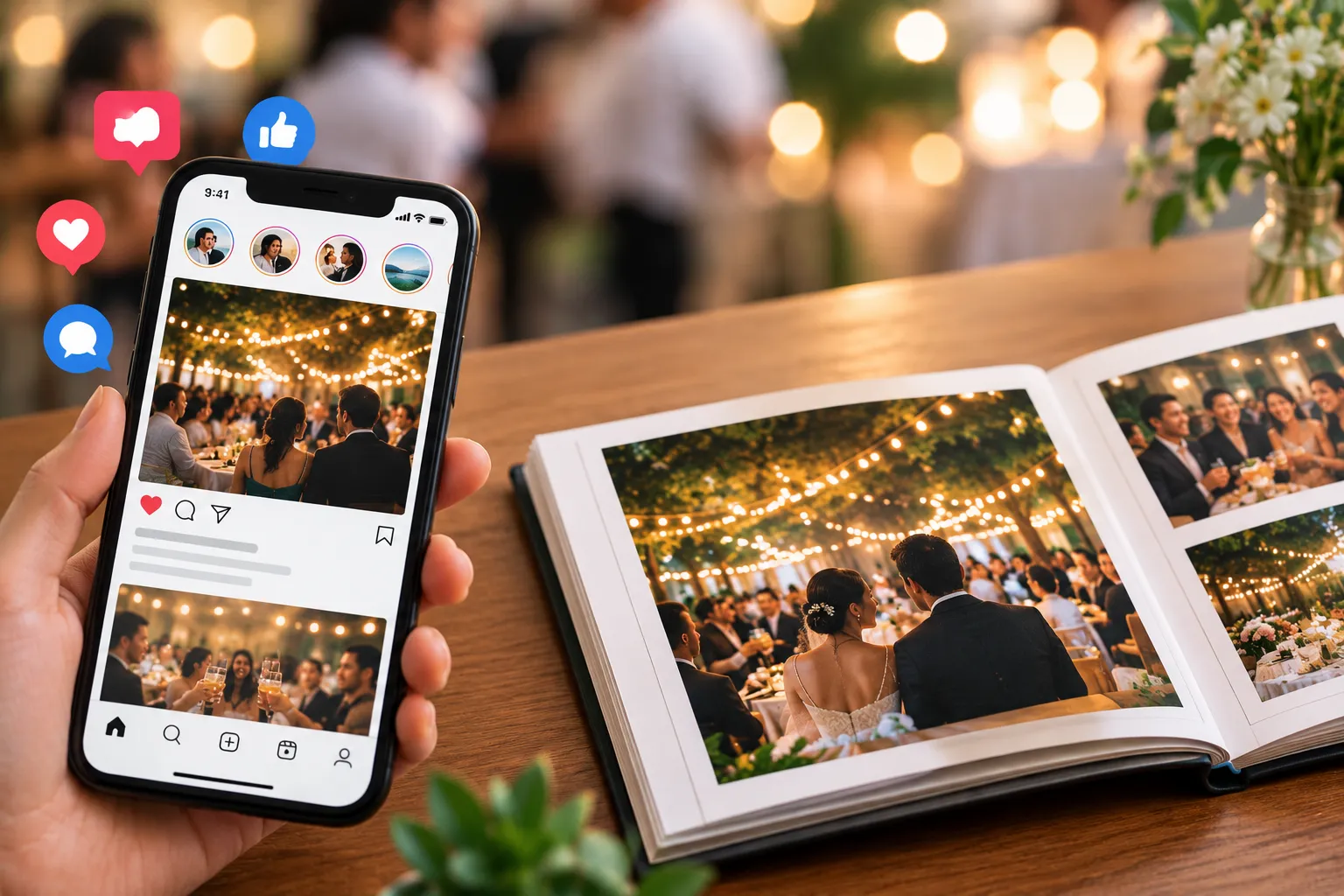
Social media is great for sharing highlights, but it is not enough for preserving event memories. Posts move quickly. Stories disappear. Algorithms decide what people see. Private accounts hide content. Hashtags get misspelled. Videos may be compressed, cropped, or lost in the feed. For events that matter, relying only on social media can leave organizers and hosts with an incomplete record.
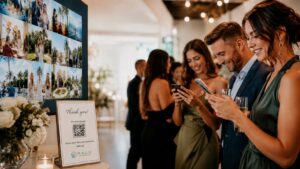
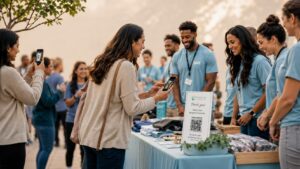
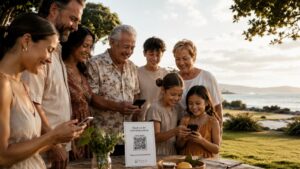
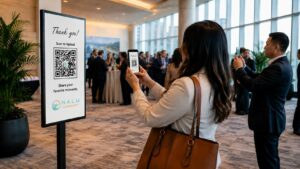
Nalu Moments was built for a different purpose: collecting event photos and videos in one dedicated place. Guests scan a QR code, upload what they captured, and contribute to a shared event gallery. Social media can still be used to promote and celebrate the event, but it should not be the only memory collection system.
Social media is built for visibility, not organization
Platforms like Facebook, Instagram, LinkedIn, TikTok, and X are designed for feeds. They prioritize engagement, recency, and discovery. That makes them useful for public updates, but not ideal for organizing all photos and videos from a specific event.
An event host may need to search through tags, mentions, stories, comments, albums, and direct messages to find content. Some posts may be missed entirely. Others may be difficult to download or save in full quality. A shared gallery is more intentional because it is built around one event and one collection.
Hashtags are easy to lose
Event hashtags can help gather public posts, but they depend on guests using them correctly. A guest may forget the hashtag, use a variation, misspell a name, or post without tagging. If the hashtag is common, unrelated posts may appear. If a guest has a private account, the host may not be able to see the post at all.
For weddings, conferences, fundraisers, and family events, this creates gaps. The host may assume they are collecting everything when they are only seeing a small portion of the content.
Stories disappear too quickly
Many of the best event moments are posted as stories. They feel casual and spontaneous, which is exactly why people use them. But stories often disappear quickly unless saved. A host may not see them in time, and even if they do, saving or resharing them can be inconsistent.
A QR code gallery gives guests a place to upload those same videos and photos so they can be preserved beyond the 24-hour window. Social media can create excitement in the moment, but the gallery protects the memory for later.
Not every guest wants to post publicly
Some guests are private. They may be happy to share photos with the couple, company, nonprofit, or event organizer, but they do not want to post publicly. Others may not use the same social platforms. Some may avoid social media entirely.
If social media is the only collection method, those guests are left out. A direct upload page creates a more inclusive option. Guests can contribute without making a public post.
Social platforms compress and crop content
Photos and videos uploaded to social media are often resized, compressed, or cropped. That may be fine for a feed, but not ideal for preserving memories. A video that looks good in a story may not be the best version to save for a recap, archive, or future marketing.
When guests upload directly to an event gallery, organizers have a better chance of collecting usable files in a central location.
A dedicated gallery gives the host control
With Nalu Moments, the event host creates a dedicated place for guest uploads. The QR code points guests to the correct page, and the content is organized around that specific event. This gives hosts more control than trying to pull memories from multiple social platforms after the fact.
That control matters for weddings, where couples want a private collection; for corporate events, where teams need to review content before using it; and for nonprofits, where privacy and dignity may be important.
Social media still has a role
The point is not to avoid social media. Social platforms are still useful for promotion, engagement, and sharing selected highlights. The better strategy is to use social media and a dedicated gallery together.
For example, a wedding couple can collect guest uploads through Nalu Moments and later share selected favorites on Instagram. A conference organizer can gather attendee photos in the gallery and then post curated highlights on LinkedIn. A nonprofit can collect fundraiser images and use approved photos in donor emails and Facebook posts.
The gallery becomes the source library. Social media becomes the distribution channel.
How to combine both strategies
A strong event photo strategy can look like this:
- Create a Nalu Moments event page.
- Display the QR code at the event.
- Encourage guests to upload photos and videos.
- Use a hashtag for public social conversation if desired.
- Review the gallery after the event.
- Select the best content for social posts, newsletters, thank-you messages, and recaps.
- Save the full gallery as the event archive.
This gives the host both engagement and preservation.
Better for recurring events
Annual events need organization. If a conference, fundraiser, reunion, award ceremony, or company event happens every year, social media alone makes it difficult to look back. Posts are scattered across years, accounts, hashtags, and platforms.
A dedicated gallery can keep memories tied to the event itself. This helps organizers build a historical archive and reuse the same process each year.
Why Nalu Moments fills the gap
Nalu Moments gives event hosts a simple way to collect what social media cannot reliably preserve. Guests still get to capture and share moments from their phones, but the host receives a centralized collection instead of a scattered trail of posts.
For important events, memories should not depend on an algorithm, a hashtag, or a disappearing story. Use social media to amplify the celebration, but use Nalu Moments to collect and preserve it.
FAQ
Is a hashtag enough for event photo sharing?
A hashtag can help public engagement, but it is not enough for complete photo collection. Guests may forget it, misspell it, or post privately.
Should events still use social media?
Yes. Social media is great for promotion and highlights. A dedicated gallery is better for collecting and organizing all event memories.
Why use a QR code instead of asking people to tag us?
A QR code gives guests a direct upload path and does not require public posting, a specific platform, or a perfect hashtag.
What types of events need a dedicated gallery?
Weddings, conferences, fundraisers, reunions, corporate events, school events, and annual celebrations all benefit from one organized event gallery.
Do not let your event memories disappear into feeds and stories. Create a Nalu Moments gallery and collect the photos and videos in one place.
Practical setup checklist
For best results, treat photo sharing as part of the event plan instead of an afterthought. Create the event page early, test the QR code on multiple phones, print the sign clearly, and ask one or two people to remind guests during the event. The simpler the instructions are, the more likely guests are to participate. After the event, send the same link again in a thank-you message so anyone who forgot to upload still has an easy way to contribute. This small follow-up can dramatically increase the number of photos and videos collected.
A strong setup includes three touchpoints: a visible printed sign, a brief verbal reminder, and a follow-up link after the event. That combination works because it reaches guests in different moments. Some people will scan during the event, some will upload later that night, and others will need the reminder the next morning. The goal is not to pressure anyone. The goal is to make sharing so easy that people are happy to contribute.
The final step is to review and organize the uploads while the event is still fresh. Save favorite moments, identify photos that can be used in recaps or thank-you messages, and note which signs or reminders worked best. That review helps improve the next event and turns a simple gallery into a long-term memory resource.