Disposable cameras have made a comeback at weddings because couples love the idea of candid guest photos. There is something charming about placing cameras on tables and imagining the surprise of seeing the wedding through everyone else’s eyes. The problem is that disposable cameras often sound better in theory than they work in real life.
The photos can be blurry. The flash can be harsh. The cameras are easy to forget. Developing film takes time and money. Some cameras come back half-used, some get lost, and some are filled with accidental shots of tablecloths, ceilings, and fingers. Couples may still get a few fun images, but they also take on extra cost and uncertainty.
A QR code wedding photo sharing platform gives couples the same candid energy with far less friction. Guests already have high-quality cameras in their pockets. Nalu Moments makes it easy for them to upload the photos and videos they capture throughout the celebration, all in one shared event gallery.
Why couples like disposable cameras
The appeal is understandable. Disposable cameras feel nostalgic and playful. They invite guests to participate in the memory-making process. They create anticipation because the couple does not know what will be on the film until it is developed.
They also add a decorative element to the reception tables. A camera next to a place card or centerpiece can feel like an interactive wedding favor. For couples who love vintage style, film photography fits the aesthetic.
But the real reason couples choose disposable cameras is not the camera itself. It is the desire to capture candid guest perspectives. That goal is still valuable. The method just may not be the most practical option anymore.
The hidden downsides of disposable cameras
Disposable cameras come with several limitations. First, the image quality can be unpredictable. Indoor receptions often have low lighting, and disposable camera flashes are not flattering in every environment. Guests may not know how close they need to stand or when to use the flash. The result can be dark, grainy, or overexposed images.
Second, film development is an added cost. Couples may buy the cameras, place them at tables, collect them, pay for processing, and wait to see the results. If many photos are unusable, the cost per good image can be surprisingly high.
Third, disposable cameras do not capture video. Wedding memories are not only visual. A short clip of a toast, a cheer, a dance, or a message from a loved one can be more meaningful than a still image. Disposable cameras miss that entire category of memory.
Fourth, the cameras can be wasteful. Most are single-use, and many end up discarded after the event. Couples who are trying to reduce unnecessary waste may prefer a digital alternative.
Why QR code photo sharing works better
A QR code gives guests a simple path to upload the photos and videos they are already taking. Instead of handing them a separate camera, you let them use the device they know best: their phone. This creates better image quality, more participation, and faster access to the memories.
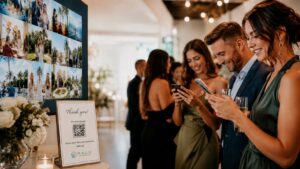
With Nalu Moments, the couple can create a custom event page and display a QR code at the wedding. Guests scan the code and upload content directly to the event gallery. There is no app to download, no film to develop, and no need to collect physical cameras at the end of the night.
The experience still feels interactive. In fact, it may be more interactive because guests can contribute throughout the event. They can upload ceremony photos, cocktail hour selfies, table shots, dance floor videos, and candid reactions in real time.
The phone camera advantage
Modern phone cameras are excellent. They handle low light better than disposable cameras, adjust focus automatically, and capture both photos and video. Guests can review their images before uploading, which reduces accidental or unusable shots. They can also upload multiple moments instead of being limited by a small roll of film.
This matters because weddings move quickly. A guest may capture a burst of photos during the grand entrance, a slow-motion video during the dance floor, or a quick candid of the couple laughing between formal moments. Phone cameras are designed for exactly that kind of spontaneous capture.
Better for guests of all ages
Disposable cameras may feel fun to some guests, but others may ignore them or feel unsure how to use them. A QR code is more flexible. Guests can participate when they feel inspired. They do not need to pass around a camera or worry about using up someone else’s film.
For older guests, simple instructions make the experience approachable. A sign can say: “Scan to share your wedding photos and videos.” A coordinator, family member, or DJ can also remind everyone during the reception. Because guests use their own phones, the upload process feels familiar.
More memories, faster access
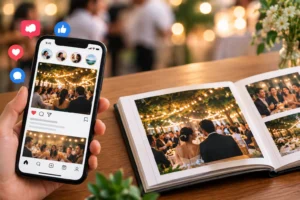
One of the best parts of a digital photo sharing platform is speed. Couples do not have to wait for film processing. They can begin seeing guest uploads almost immediately. The day after the wedding, they may already have hundreds of candid moments to enjoy while waiting for the professional gallery.
This does not take anything away from the photographer. It simply fills the gap between the wedding day and the final edited photos. Couples can relive the energy of the event while it is still fresh.
A better fit for destination weddings
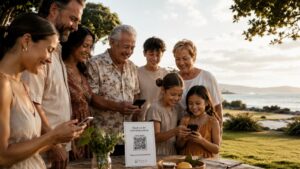
Destination weddings create even more reasons to use QR code photo sharing. Guests may be traveling, exploring the venue, attending welcome parties, and capturing moments across multiple days. Disposable cameras are limited to the reception, but a digital event gallery can collect photos from the entire wedding weekend.
The couple can use the same Nalu Moments event page for the rehearsal dinner, welcome event, ceremony, reception, brunch, and informal group activities. Guests can upload from anywhere, making the gallery a more complete record of the experience.
How to keep the charm without the inconvenience
Couples who love the nostalgic look of disposable cameras can still create that feeling visually. Use a vintage-style sign, table card, or prompt list. Ask guests to capture specific moments such as “best dance move,” “funniest table selfie,” “sweetest candid,” or “favorite decor detail.” The experience remains playful, but the collection process becomes easier.
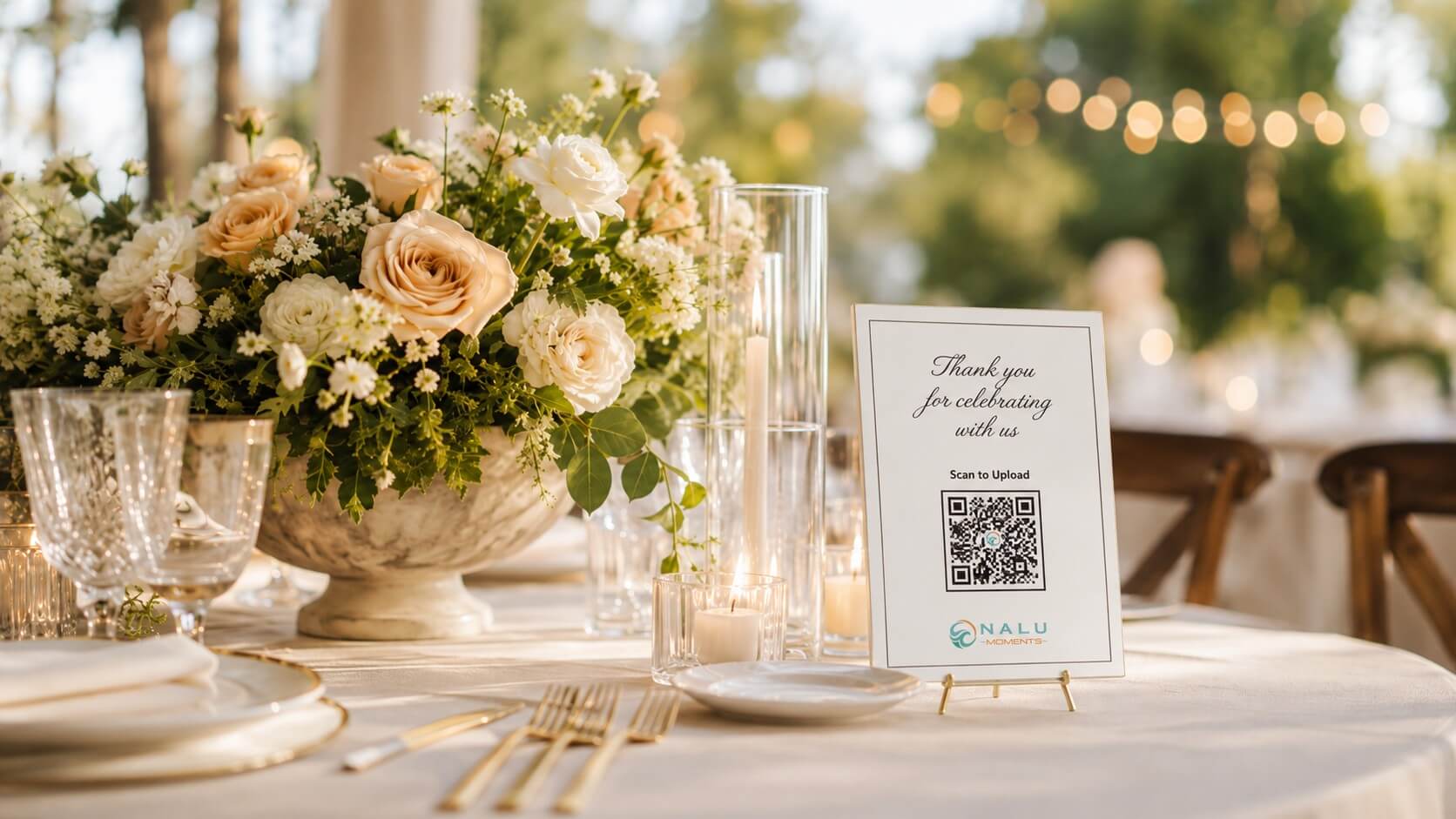
You can even design the QR code sign to match the wedding style. Elegant script, neutral colors, floral accents, or retro typography can make the digital option feel intentional and beautiful.
Cost comparison to consider
Disposable cameras include the cost of cameras, development, scanning, and possible shipping or pickup. A digital sharing platform shifts the focus from physical supplies to a reusable event experience. Instead of paying for uncertain film results, couples invest in an organized way to collect a larger volume of guest content.
When couples compare the number of usable photos and videos, QR code sharing usually provides more value. It captures more memories, from more people, with less work after the wedding.
FAQ
Are disposable cameras still worth it for weddings?
They can be fun for a specific aesthetic, but they are not the most efficient way to collect guest photos. QR code sharing usually provides more photos, better quality, and videos.
Can QR code photo sharing feel as fun as disposable cameras?
Yes. Use creative signage, table prompts, and announcements to make uploading feel like part of the celebration.
Do guests need an app to upload photos to Nalu Moments?
No. Guests can scan the QR code and upload from their phones without downloading an app.
Can guests upload videos too?
Yes. That is one of the biggest advantages over disposable cameras. Guests can share both photos and videos from the event.
If you love the idea of candid wedding memories but want a simpler, more modern solution, Nalu Moments is the better alternative to disposable cameras.